AMD CEO苏姿丰在麻省理工学院毕业演讲全文2026
All right, good afternoon everyone, President Cornbluth, Chairman Gorenberg, trustees, faculty, family, friends, and most importantly the MIT class of 2026, congratulations, you've earned this, and I can tell you that standing here feels very different than I expected. I've given a lot of talks over the years, but this one is quite personal, and as you can imagine with Murphy's law, I somehow managed to lose my voice this week, so please bear with me if I sound a little rough, but I couldn't be happier to be here with you.
好的,大家下午好,Cornbluth校长,Gorenberg主席,各位校董、教职员工、家人、朋友们,最重要的是,麻省理工学院2026届的毕业生们,祝贺你们!这是你们应得的荣誉。我可以告诉你们,站在这里的感觉和我想象的完全不同。这些年来我做过很多次演讲,但这次非常个人化。正如你们能想象到的墨菲定律一样,我这周不知怎么地失声了,所以如果我的声音听起来有点沙哑,请多多包涵,但我非常高兴能和你们在一起。
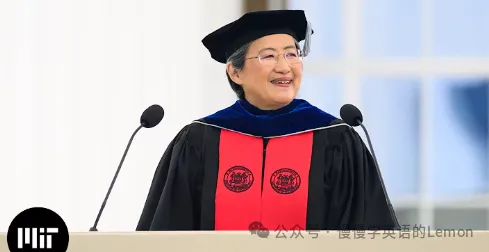
And if I give you a little bit of my story, I came to MIT in the fall of 1986; my parents dropped me off at Next House. I was 17 years old, born in Taiwan, raised in Queens, and I was pretty sure I was good at math. Then of course I walked into 6.01 and 6.02, and within about two weeks I realized that there were a lot of people at MIT who were very, very good at math, and I remember staring at those first problem sets thinking, my goodness, these are super hard.
给你们讲一点我的故事:1986年秋天,我来到麻省理工学院;我父母把我送到了Next House宿舍。我当时17岁,出生在台湾,在皇后区长大,而且我很确定我的数学很好。当然,后来我走进了6.01和6.02的课堂,大约两周内我就意识到,在麻省理工学院有很多很多数学极好的人。我记得盯着最初的几份习题集想,天哪,这些题太难了。
And I'd never really pulled an all-nighter until freshman year; it was a new experience but it was a lot of fun doing it together with your classmates.
大一之前,我从来没有熬过通宵;这是一种全新的体验,和同学们一起熬夜其实很有趣。
Now MIT has this incredible way of pushing you further than you thought you could go. You wrestled with the problem, you blew up a circuit or two (yes, some of you may have), and then somehow the thing worked, and suddenly you realized that you could build something real, and that's when I started feeling like an engineer.
麻省理工学院有一种不可思议的方式,能将你推向超越你想象的极限。你与问题搏斗,你可能烧毁了一两个电路(是的,你们中的一些人可能也做过),然后不知怎么地,这东西居然运转了。突然间你意识到你可以建造出真正的东西,就在那时,我开始觉得自己像个工程师。
One of the best parts of MIT is actually Urop , the opportunity as an undergraduate to work on real research, and that actually truly changed my life. My first Urop was in Professor Hank Smith's lab in building 39, which Anantha tells me we are decommissioning and moving, making X-ray lithography mass blanks for a grad student.
麻省理工学院最棒的部分之一实际上是UROP(本科生研究机会计划),本科生有机会参与真正的研究,这彻底改变了我的一生。我的第一个UROP是在39号楼Hank Smith教授的实验室(Anantha告诉我们正在停用和搬迁这栋楼),为一个研究生制作X射线光刻掩模版。
To be absolutely clear, at the time I had no idea what that actually meant, but I got to put on my first bunny suit and walk into a clean room and start building devices on little 2-in wafers, which at the time was pretty state-of-the-art.
坦白说,当时我完全不知道那究竟意味着什么,但我穿上了我的第一件防尘服,走进无尘室,开始在2英寸的小晶圆上制造器件,在当时这是相当先进的技术。
赞助信息
And I learned very quickly to be careful because those wafers were actually really delicate, and I definitely didn't want to be the one who broke them. But I ran a bunch of experiments, most of them didn't work the way we expected, and so we adjusted and we tried again, and it was the coolest thing ever.
我很快就学会了要小心谨慎,因为这些晶圆实际上非常脆弱,我绝对不想成为打碎它们的人。我做了一系列实验,大多数结果都不如预期,所以我们不断调整并重新尝试,那是有史以来最酷的事情。
For the first time I wasn't just learning about technology in a classroom, I was part of a team trying to discover something new. And I remember thinking, "Wow, we can build things this small, things tiny enough to fit on a die the size of a coin but powerful enough to change the world," and that's when I fell in love with semiconductors.
我第一次不再只是在教室里学习技术,而是成为团队的一员,试图去发现新的东西。我记得当时在想:“哇,我们可以把东西做得这么小,小到可以放进硬币大小的芯片里,却又强大到足以改变世界”,从那一刻起,我爱上了半导体。
Later I had the privilege of working with Professor Dmitri Antonis, who became my PhD adviser, and that was where I really learned how to solve problems. I remember spending weeks in the clean room fabricating devices and then bringing my wafers up to the test lab only to discover they didn't behave the way I expected at all, and so I'd go back to Demetri's office and we'd figure out what we should do next.
后来,我有幸与Dmitri Antonis教授合作,他成为了我的博士生导师,在那里我真正学会了如何解决问题。我记得在无尘室里花了几周时间制造器件,然后把我的晶圆带到测试实验室,却发现它们的表现完全不如预期。于是我回到Dmitri的办公室,我们会一起弄清楚接下来该做什么。
And looking back, that was probably where I grew the most at MIT, because little by little I went from a new grad student learning about the field to someone doing original research and actually contributing something new to the field.
赞助信息
回想起来,那可能是我在麻省理工学院成长最快的地方,因为我一点一滴地,从一个刚入门学习该领域的新研究生,变成了一个能够进行原创性研究、并真正为该领域做出新贡献的人。
And along the way I started believing in myself, not the confidence that I would always know the answer, but the confidence that even when I didn't know the answer I could figure it out.
在这个过程中,我开始相信自己——不是那种觉得总会知道答案的自信,而是一种即使我不知道答案,我也能想办法解决的自信。
What I realize now is MIT was teaching me something much bigger than semiconductor device physics; mens et manus, mind in hand. When I was a student I thought it was just a motto, now I think it captures exactly what makes MIT so special.
我现在意识到,麻省理工学院教给我的,远比半导体器件物理学要宏大得多;“Mens et Manus”(手脑并用)。我当学生时以为这只是一句座右铭,现在我认为它精确地概括了麻省理工学院如此特别的原因。
MIT teaches you to think deeply, but it also teaches you to build, to test ideas, to keep going when the first experiment or even the fifth experiment doesn't work, and over time you start believing that you can solve problems that once felt impossible. I carried that feeling with me long after I left campus.
麻省理工学院教你深入思考,但也教你去构建,去测试想法,当第一次甚至第五次实验失败时继续坚持。久而久之,你开始相信自己能解决那些曾经感觉不可能的问题。离开校园很久以后,我依然带着这种感觉。
When I joined IBM I found myself starting all over again. IBM had hundreds of thousands of employees; I was 25 years old wondering how I could possibly make a difference in a company that big, but I learned something important very quickly: engineering actually doesn't care how old you are, it actually cares whether you have good ideas.
当我加入IBM时,我发现自己又从头开始了。IBM有几十万名员工;我当时25岁,想知道自己怎么可能在这么大的一家公司里有所作为。但我很快就学到了重要的一点:工程学其实并不在乎你的年龄,它真正在乎的是你是否有好主意。
赞助信息
And one of my mentors told me something that I've never forgotten: run towards the hardest problems. At the time I'm not sure I really knew what that meant, but I now realize this was the best advice I've ever received: hard problems really teach you what you're capable of.
我的一位导师告诉了我一句我从未忘记的话:迎着最难的问题上。当时我不确定我是否真的明白它的意思,但我现在意识到这是我得到的最好的建议:艰难的问题才会真正教会你了解自己的潜力。
So fast forward a bit, 12 years ago I got a chance to put that lesson to the test; I had the opportunity to become CEO of AMD. AMD had a lot of potential, but the company had been through a few tough years, and some of my mentors thought taking that job was actually kind of risky. But for me this was my dream job; this is what I'd been training for all those years: the opportunity to work at the bleeding edge of technology on problems that really mattered.
稍微快进一下,12年前,我得到了一次检验这个教训的机会;我有机会成为AMD的首席执行官。AMD有很大的潜力,但这公司经历了几年的低谷,我的一些导师认为接下这份工作其实是有风险的。但对我来说,这是我梦想中的工作;这就是我这么多年来一直在训练的事情:有机会在技术的最前沿,去解决真正重要的问题。
And the first thing we had to do was figure out what we wanted to be when we grew up; this is a big company that had to figure this out. We made a long-term bet that high performance computing would be the most important technology of the future, and we gave our talented team the room to think big.
我们要做的第一件事就是弄清楚我们未来想成为什么;这是一家大公司,必须弄明白这一点。我们下了一个长期赌注,认为高性能计算将是未来最重要的技术,我们给了才华横溢的团队敢于大胆思考的空间。
And over the next several years we built technology to enable the most powerful computers in the world, and I can tell you through all of it I used every skill that MIT ever taught me and then some. I was trying to put it in words and I decided that calling it the engineer's instinct was kind of the right thing.
赞助信息
在接下来的几年里,我们构建了赋能世界上最强大计算机的技术。我可以告诉你们,在这个过程中,我用尽了麻省理工学院教给我的每一项技能,甚至更多。我试图用语言来形容它,我决定称之为“工程师的直觉”是最合适的。
It's the ability to face what seemed like an unsolvable problem, break it down, and methodically work through it step by step. But I also learned something else: the engineer's instinct is even more powerful when it becomes shared by a team, and the greatest satisfaction of my career has been bringing people together to do something more than any of us thought was possible.
这是一种直面看似无法解决的问题,将其拆解,并有条不紊地一步步去攻克的能力。但我也学到了另一件事:当工程师的直觉被一个团队所共享时,它会变得更加强大;我职业生涯中最大的满足感,就是把人们聚集在一起,去完成一些超出我们所有人想象的事情。
And that brings me to today and where you guys are. Over the last few decades we've experienced several major technology shifts: the internet changed how we communicate, mobile computing changed how we live, cloud computing changed how we work, and now we're at the beginning of the AI wave.
这就把我带到了今天,带到了你们现在的阶段。在过去的几十年里,我们经历了几个重大的技术转变:互联网改变了我们沟通的方式,移动计算改变了我们生活的方式,云计算改变了我们工作的方式,而现在我们正处于人工智能(AI)浪潮的开端。
And to me, AI is really different from all those other waves. The way I think about it is, it's not just a tool that can help us do things faster because we have lots of tools, it's actually deeper than that. It has the potential to accelerate discovery in every field and help us solve problems that we've never been able to solve before.
对我来说,AI与所有那些其他的浪潮都截然不同。我的看法是,它不仅仅是一个能帮我们把事情做得更快的工具,因为我们已经有很多工具了,它实际上比那更深刻。它有潜力加速每个领域的发现,帮助我们解决以前从未能解决的问题。
And to make it personal, the area that excites me the most is actually what we can do in medicine and healthcare. I think we've all experienced firsthand what it feels like when someone you love is sick, and even with incredible doctors and the best care you realize how hard it is for any one person or any one team to bring together all of the knowledge that has been gathered to help in that critical time of need.
赞助信息
就我个人而言,最让我兴奋的领域实际上是我们在医学和医疗保健方面能做的事情。我想我们都亲身体验过,当你爱的人生病时是什么感觉。即使有出色的医生和最好的护理,你也会意识到,对于任何一个人或任何一个团队来说,在那个关键的时刻,将所有积累的知识汇集起来提供帮助是多么困难。
AI can help us change that. It can help doctors and researchers bring the world's best expertise to each patient and each loved one, and deliver the care that we want for the best chance of a successful outcome, and this I think is the promise of AI at its best.
AI可以帮助我们改变这一点。它可以帮助医生和研究人员将世界上最好的专业知识带给每一位患者和每一位亲人,并提供我们所希望的护理,以获得最佳的治愈机会,我认为这就是AI最美好的承诺。
Now the way to think about it is, it makes each of us more capable. Whether you're talking about medicine, science, energy, climate, I think you can say we may discover more in the next 10 years than we have in the last 30. But let me be clear about something: technology itself does not decide what the future looks like; the best people do.
现在,思考AI的方式是,它让我们每个人都变得更强大。无论你谈论的是医学、科学、能源还是气候,我想你可以说,在未来的10年里,我们的发现可能会比过去30年还要多。但让我明确一件事:技术本身并不能决定未来的样子;最优秀的人才可以。
For everything that AI can do, AI can't decide which problems are worth solving, it can't make the hard judgments when the data is not there, it can't take responsibility for the outcomes. These are actually our responsibilities, and they matter now more than ever.
尽管AI能做很多事情,但AI不能决定哪些问题值得解决,当数据不存在时,它不能做出艰难的判断,它也不能对结果负责。这些实际上是我们的责任,而且它们现在比以往任何时候都更重要。
This is why I feel this is such an extraordinary moment to graduate from MIT, because the world does not just need people who know how to use powerful tools, it needs people who know what to use them for: people with a sense of purpose, judgment, courage, people who look at a hard problem and say "I know this is really really important and we can figure this out.". And that is exactly who you have become here at MIT.
赞助信息
这就是为什么我觉得从麻省理工学院毕业,现在是一个如此非凡的时刻,因为世界不仅需要知道如何使用强大工具的人,它更需要知道用这些工具做什么的人:那些有使命感、有判断力、有勇气的人,那些看着一个难题说“我知道这非常非常重要,我们一定能想出办法”的人。而这正是你们在麻省理工学院所成为的人。
So here's what I want to leave you with. I've been very fortunate in many ways; I have great parents, I received an extraordinary education, I've had the chance to work with great people, but I also believe I've been very lucky in my career. When people ask me for career advice I often tell them yes, you need to work really hard, but also understand that luck matters.
所以,这就是我想留给你们的话。我在很多方面都非常幸运;我有伟大的父母,我接受了非凡的教育,我有机会和伟大的人一起工作,但我也相信我的职业生涯非常幸运。当人们向我寻求职业建议时,我经常告诉他们:是的,你需要非常努力地工作,但也要明白运气很重要。
And over time I've come to believe that the best people find ways to make their luck. Luck is not just being in the right place at the right time; it is taking the risk to work on something really hard, it's challenging yourself, it's choosing problems where you may not know the answer, it's surrounding yourself with people who make you better, and yes, it's believing that you, the class of 2026, can change the world.
随着时间的推移,我开始相信,最优秀的人总能找到创造自己运气的方法。运气不仅仅是在正确的时间出现在正确的地方;它是冒险去研究真正困难的事情,它是挑战自己,它是选择那些你可能不知道答案的问题,它是让你周围的人让你变得更好,而且,是的,它是相信你们——2026届的毕业生们——能够改变世界。
So be incredibly ambitious about what problems you choose to solve, run toward the hardest ones, and trust what MIT has taught you: that engineer's instinct. That's how you make your own luck.
因此,对你选择解决的问题要有极大的野心,迎着最难的问题上,并相信麻省理工学院教给你的东西:那种工程师的直觉。这就是你创造自己运气的方式。
I want to take a moment to acknowledge all the families and loved ones who are here in the audience today. None of these graduates got here without you; thank you for believing them, supporting them, and helping them reach this moment. This achievement belongs to you too.
赞助信息
我想花一点时间感谢今天在场的所有家庭和亲人们。如果没有你们,这些毕业生中没有一个人能走到这里;感谢你们相信他们,支持他们,并帮助他们迎来这一刻。这项成就也属于你们。
And to the class of 2026, remember somewhere in the years ahead you're going to walk into another room where you have absolutely no idea what you're doing. You've done this before; go figure it out. And as one MITER to another, I am incredibly honored to be here with you today. Congratulations class of 2026.
对于2026届的毕业生们,请记住,在未来的岁月里,你总会走进另一个房间,在那里你对自己在做什么毫无头绪。你们以前经历过这种事;去想办法解决它吧。作为一名麻省理工校友对另一名校友的寄语,我今天非常荣幸能和你们在一起。祝贺你们,2026届的毕业生们!
 真的是商人重利。